Setting up roborock no go zones pet water bowls protection takes about two minutes in the Roborock app and instantly stops your robot from bumping bowls, soaking mop pads, or splashing kibble across the kitchen. Open the Roborock app, select your saved map, tap Map Editing (or Furniture on newer Saros models), choose No-Go Zone, then drag a rectangle around the feeding station with at least 6 inches of buffer on each side. Save the map, send the robot back to the dock, and the zone becomes permanent across every future cleaning run. Below, I walk through the exact taps, the buffer math that actually works, the best Roborock models for multi-pet households, and the troubleshooting steps when your robot ignores the zone you just drew.
Why Pet Water Bowls and Robot Vacuums Don't Mix
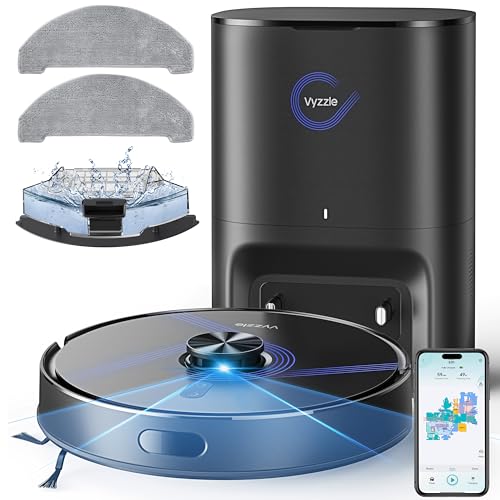
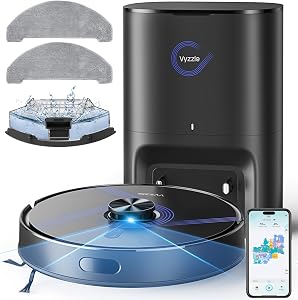
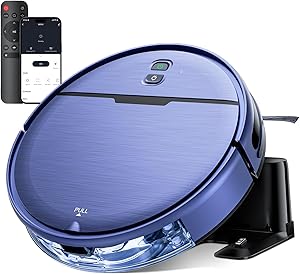
- 𝟖𝟎𝟎𝟎𝐏𝐚 𝐇𝐲𝐩𝐞𝐫 𝐒𝐮𝐜𝐭𝐢𝐨𝐧 The Vyzzle robot vacuum cleaner delivers 8000Pa suction to remove pet hair, dust, crumbs, cat litter, and daily debris from hard
- 𝟑𝟔𝟎° 𝐋𝐢𝐃𝐀𝐑 𝐒𝐦𝐚𝐫𝐭 𝐌𝐚𝐩𝐩𝐢𝐧𝐠 Powered by advanced LiDAR navigation and SLAM technology, the robot vacuum and mop scans your home in real time to create accurate
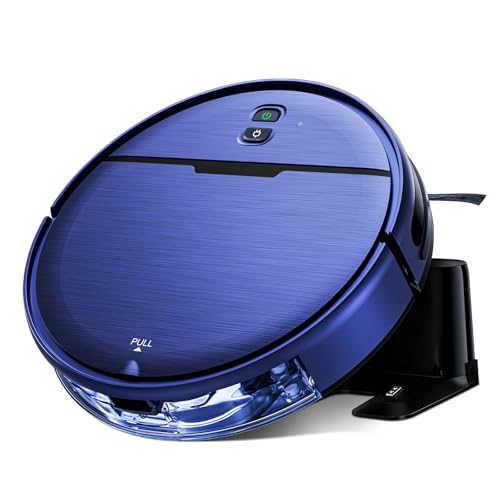
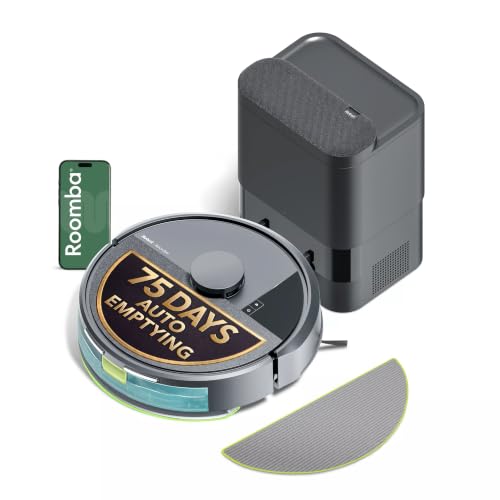
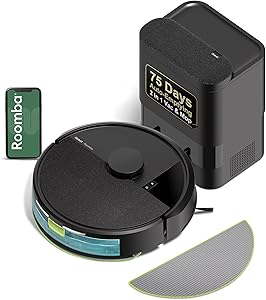
- 75 DAYS HANDS‑FREE – The Roomba 105X Combo + AutoEmpty Dock captures dirt and dust in a sealed bag that locks in 99% of allergens (0.7 microns), so you can cleanup without
- VACUUMS & MOPS TOGETHER TO SAVE TIME. Combines powerful vacuuming with a built‑in microfiber mop to clean hard floors in one run—less manual work for busy homes
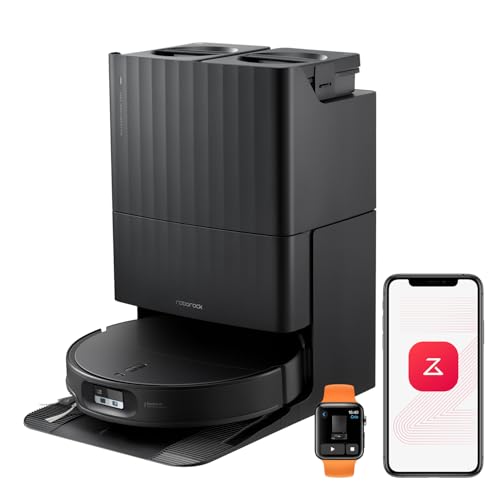
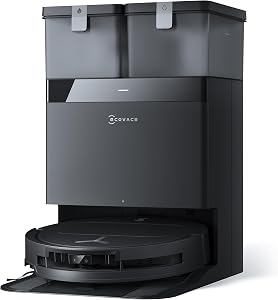
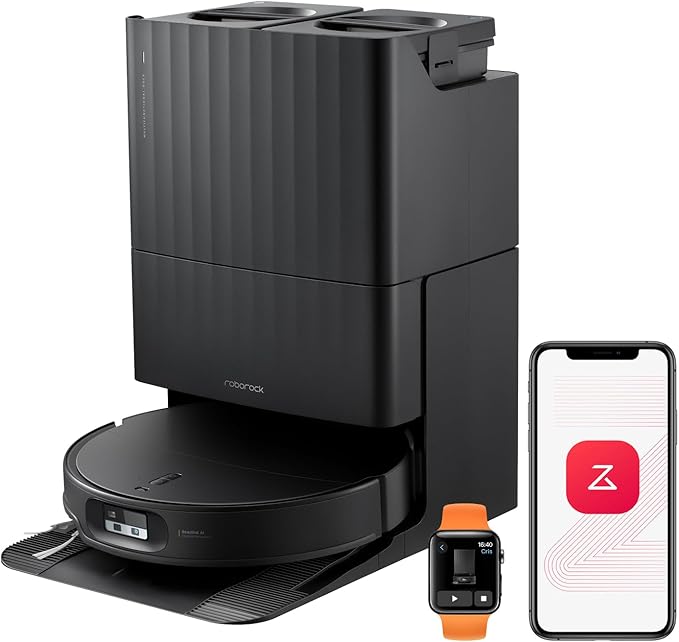
- 𝟮𝟱,𝟬𝟬𝟬 𝗣𝗮 𝗛𝘆𝗽𝗲𝗿𝗦𝘂𝗰𝘁𝗶𝗼𝗻 & 𝗨𝗽𝗴𝗿𝗮𝗱𝗲𝗱 𝗠𝗼𝗽𝗽𝗶𝗻𝗴 𝗦𝘆𝘀𝘁𝗲𝗺: Powerful 25,000 Pa suction paired with a dual anti-tangle system effortlessly removes
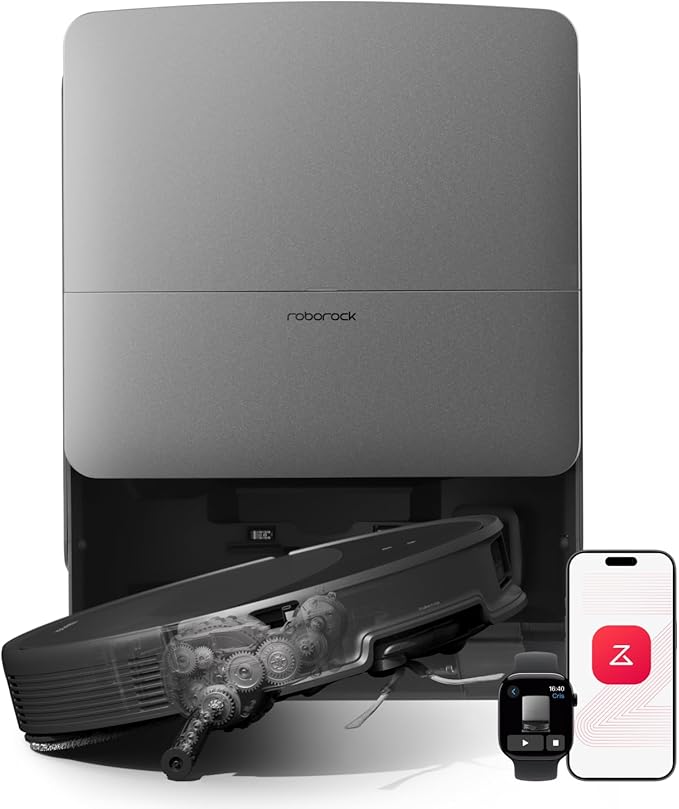
- 𝗙𝗹𝗲𝘅𝗶𝗔𝗿𝗺 𝗧𝗲𝗰𝗵𝗻𝗼𝗹𝗼𝗴𝘆: 100% Edge & Corner Cleaning: Roborock's exclusive FlexiArm Arc Side Brush extends beyond ordinary reach to clean walls, corners, and
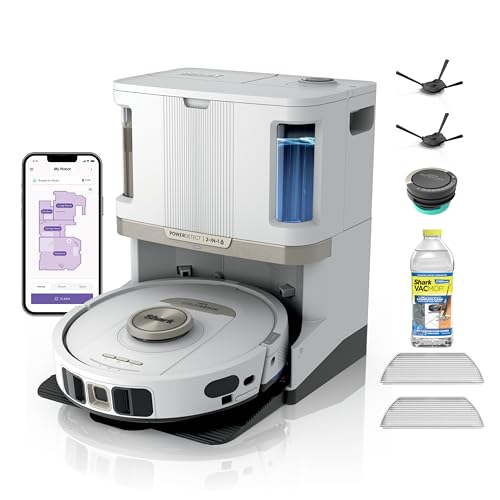
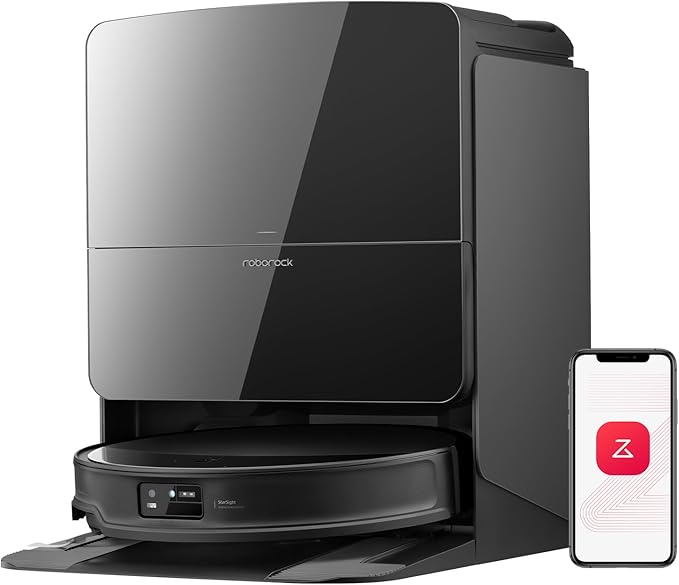
- UP TO A MONTH OF HANDS-FREE CLEANING AND MAINTENANCE: The robot automatically empties debris into the 60-day-capacity bin, automatically refills its own water tank for up to 30
- 5 INTELLIGENT POWERDETECT CLEANING TECHNOLOGIES: Five powerful cleaning technologies help to target hidden debris, stuck-on stains, edges and to optimize cleaning for every floor
Top Picks
Best Roborock Models for Pet Households in 2026
Not every Roborock handles no-go zones identically. The newer Saros line uses dual LiDAR plus 3D structured light, which keeps the no-go boundary aligned with reality even when furniture shifts. Older Q-series models rely on single LiDAR and can drift up to 2 inches over a month, requiring buffer adjustments. Here's how the current 2026 pet-friendly lineup compares:
| Model | Suction | No-Go Accuracy | Pet-Specific Feature | Best For |
|---|---|---|---|---|
| Roborock Saros 20 | 36,000 Pa | ±0.5 in | Pet obstacle AI, kibble recognition | Multi-pet homes, long hair |
| Roborock Saros 10R | 22,000 Pa | ±0.5 in | Zero-tangling brush, ultra-slim profile | Homes with low feeding stations |
| Roborock Qrevo Edge 2 | 25,000 Pa | ±0.8 in | Edge-cleaning side mop, ultra-slim 3.1 in | Bowls under cabinet toe-kicks |
| Shark PowerDetect NeverTouch Pro | N/A (suction class) | ±1.2 in | PetProof obstacle avoidance, self-empty | Budget alternative, non-Roborock |
| Shark Matrix Plus 2-in-1 | N/A (suction class) | ±1.5 in | Sonic mopping, matrix grid clean | Hard floor pet homes |
Even the smartest LiDAR robot in 2026 sees a low ceramic water bowl as a small, flat obstacle it can nudge past. The problem isn't navigation — it's physics. A 1.5-inch tall stainless bowl sits below the bumper sensor sweep on most robots, and when the side brush clips the rim, you get a 12-ounce puddle and a panicked dog. Worse, if your robot is in mop mode, the wet pad drags water and food slurry across the floor, and the recharge dock refuses to re-wet the pad because the dirty water tank fills with food debris.
A properly drawn no-go zone solves all three failure modes at once. It tells the robot's path planner to route around the rectangle entirely, never enter it for vacuuming, never enter it for mopping, and never use it as a shortcut between rooms. On Roborock's 2026 firmware (Saros and Qrevo lines), no-go zones are honored at the navigation layer, not the avoidance layer — meaning the robot calculates routes as if the rectangle is a solid wall, which is far more reliable than obstacle recognition.
Step-by-Step: Drawing the No-Go Zone in the Roborock App
These steps assume you've already completed at least one full mapping run so the app has a saved map to edit. If you haven't, run a quick map without cleaning first (Map Only mode under quick settings).
- Open the Roborock app and tap your robot from the home screen.
- Tap the map preview to expand it full-screen.
- Tap the three-dot menu (top right) and select Map Editing. On Saros 20 and Saros 10R, this is now labeled Map Management Edit.
- Choose No-Go Zone (red rectangle icon). Some models split this into No-Go (vacuum) and No-Mop (mop only) — for water bowls, use No-Go so neither function enters.
- Tap + Add, then drag the corners of the rectangle around the feeding station. Leave at least 6 inches of clearance on every side — robots round corners aggressively and a tight zone gets clipped.
- Tap Save. The zone now shows as a red shaded rectangle on the map.
- Send the robot to the dock so the new map syncs to the robot's onboard storage.
That's it. The robot will treat the rectangle as impassable on every future cleaning cycle, including scheduled runs and voice-triggered cleans through Alexa or Google Home.
Buffer Distance: The Math Most Guides Get Wrong
Six inches isn't arbitrary. Roborock robots have a turning radius of roughly 4 inches at full speed, and the side brush extends another 1.2 inches past the chassis on Saros and Qrevo models. Add a half-inch safety margin for cumulative SLAM drift (LiDAR maps drift slightly over weeks of use) and you arrive at 5.7 inches — rounded up to 6.
For elevated feeding stations or bowls on a silicone mat, extend the buffer to 9 inches on the approach side. Mats are detected as low obstacles and the robot may try to mount them, dragging the side brush right into the bowl during the climb attempt.
Roborock Saros 20 — Best Overall for Pet Water Bowl Avoidance
The Saros 20's 36,000 Pa suction is the headline, but the real pet-household win is its onboard pet-object AI that recognizes food bowls, water bowls, and pet toys as distinct categories. Even before you draw a no-go zone, the robot will detour around bowls it sees during mapping. Combined with a manually drawn no-go zone, you get belt-and-suspenders protection. The dual LiDAR keeps zone boundaries accurate to within half an inch over months of use. roborock Saros 20 Robot Vacuum and Mop.
Roborock Saros 10R — Best for Low-Profile Feeding Stations
If your pet's bowls live under a kitchen island overhang or inside a cabinet cutout, the Saros 10R's ultra-slim 3.14-inch chassis fits where taller robots stall. The zero-tangling brush also means dropped kibble doesn't wrap around the roller and force a midnight maintenance alarm. Its no-go zone honoring is identical to the Saros 20 — both run the same 2026 firmware branch. roborock Saros 10R Robot Vacuum and Mop.
Roborock Qrevo Edge 2 — Best Mid-Tier Pick
The Qrevo Edge 2 carries the same no-go zone system as the Saros line at a lower price. Its extending side mop is the standout pet feature: it reaches into the 6-inch buffer zone around the no-go rectangle to mop the floor your feeding station mat doesn't cover, without crossing the boundary. For homes with one pet and a single feeding station, this is the sweet-spot model. roborock Qrevo Edge 2 Robot Vacuum and Mop.
Shark PowerDetect NeverTouch Pro — Best Non-Roborock Alternative
If you're cross-shopping brands, the Shark PowerDetect implements no-go zones through its SharkClean app with similar accuracy. The PetProof obstacle avoidance specifically trains on pet-bowl shapes, and the self-empty base handles weeks of pet hair without intervention. Zone accuracy is slightly looser than Roborock's, so add an extra 2 inches of buffer. Shark Robot Vacuum & Mop Combo.
Shark Matrix Plus 2-in-1 — Best Budget Mop-Capable Pick
For hard-floor pet homes on a tighter budget, the Matrix Plus combines vacuuming with sonic mopping at a price well below the Roborock Saros line. No-go zone drawing in the SharkClean app is straightforward, though you'll need a slightly wider buffer (8+ inches) around water bowls due to looser SLAM tolerances. Shark Matrix Plus 2in1 Robot Vacuum & Mop with Sonic Mopping.
Troubleshooting: When the Robot Ignores Your No-Go Zone
The most common failure is the robot entering a zone you swear you drew. Nine times out of ten, the cause is one of these:
- Zone drawn on the wrong map. If you have multi-floor mapping enabled, no-go zones are per-floor. Confirm you're editing the correct saved map before drawing.
- Robot wasn't returned to dock after editing. Zones save to the cloud immediately but only sync to the robot's local memory at dock contact. Send it home once after every map edit.
- Quick-clean or zone-clean override. When you tap a specific room or draw a spot-clean rectangle that overlaps the no-go zone, some firmware versions prioritize the manual command. Always trigger full cleans from the home screen, not from inside the no-go region.
- Map was remade. A full re-map (after a firmware update, factory reset, or major furniture rearrangement) wipes no-go zones. You'll need to redraw them.
For more on managing your robot's daily routine around pets, see our guide on scheduling Roborock cleans around pet feeding times and our breakdown of the best robot vacuums for pet hair in 2026.
Going Beyond No-Go: Layered Protection
A no-go zone is the foundation, but pet households benefit from stacking defenses. Combine the zone with these tactics:
- Elevate the feeding station. A 4-inch raised stand puts bowls above the side-brush sweep arc, so even if the robot brushes the base, water stays put.
- Use a non-slip silicone mat. Roborock's obstacle AI recognizes silicone mats and reduces approach speed, adding a second layer of caution.
- Schedule cleans when bowls are empty. Many pet owners refill bowls morning and evening — schedule the robot for 11am or 2pm when bowls are at their lowest.
- Enable Carpet Boost / No-Mop on the feeding area. If your kitchen has a rug under the feeding station, the no-mop overlay prevents wet pads from saturating the rug edge.
For more advanced map management, check our guide to Roborock multi-floor mapping.
Frequently Asked Questions
How many no-go zones can I set up on a Roborock?
Current 2026 Roborock firmware supports up to 10 no-go zones, 10 no-mop zones, and 10 virtual walls per saved map. For most pet households with one or two feeding stations, you'll use 1-2 zones, leaving plenty of room for litter boxes, fragile décor, and cable nests.
Will the Roborock remember no-go zones around pet water bowls after a firmware update?
Yes, in nearly all cases. Roborock's 2026 firmware preserves saved maps and no-go zones through over-the-air updates. The rare exception is a major version jump (for example, the 5.x to 6.x branch transition in early 2026) which may require re-confirming zones in the app. Check the app immediately after any large update.
Can I draw a circular no-go zone instead of a rectangle?
No — Roborock only supports rectangular no-go zones. For round feeding stations, draw a square that fully encloses the circle plus the 6-inch buffer. The small extra area you lose to cleaning is well worth the spill protection.
Do no-go zones work in mop-only mode?
Yes. A No-Go Zone blocks both vacuum and mop functions. If you only want to block mopping (for example, near a rug edge but you still want vacuuming), use the separate No-Mop Zone tool instead — it's the blue rectangle icon in the same map editor.
Why does my Roborock keep bumping the water bowl even with a no-go zone?
Three causes account for almost all reports: the buffer is too small (increase to 9+ inches), the robot was started via spot-clean inside the zone (always start from home screen), or the map drifted after furniture moved (force a re-map, then redraw the zone). Saros 20 and Saros 10R rarely show drift; older Q5 and Q7 models are more prone to it.
Can I set different no-go zones for different times of day?
Not directly — no-go zones are persistent and apply to every cleaning run. However, you can simulate time-based zones by using scheduled selective room cleaning: schedule the kitchen room only for times when bowls are empty, and schedule other rooms more frequently. This avoids the kitchen entirely on a time-based pattern.
Do Roborock no-go zones work with voice commands like Alexa or Google Home?
Yes, no-go zones are honored regardless of how the clean is triggered — app, voice assistant, scheduled run, or the physical button on the dock. The zones live in the robot's onboard map, so any clean command respects them automatically.
Final Thoughts
Setting up roborock no go zones pet water bowls protection is one of the highest-value two minutes you'll spend with your robot vacuum. Draw the rectangle with a 6-inch buffer, return the robot to its dock to sync, and you've eliminated the single most common pet-household robot failure mode. Pair the zone with an elevated feeder and a scheduled mid-day clean, and your kitchen floor stays dry, your pet stays calm, and your mop pad stays usable. For multi-pet homes or unusual feeding station setups, the Saros 20's pet-object AI is worth the premium; for everyone else, the Qrevo Edge 2 hits the value sweet spot for 2026.